

Blog
Landscape Folding Screen Ideas for Living Rooms and Hotel Lounges

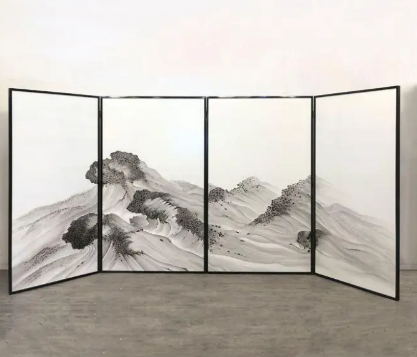
A landscape folding screen changes the room differently from a plain divider. It does not only create separation. It adds depth. Mountain scenes, mist, gardens, cranes, and ink-wash compositions pull the eye further into the room, which is why landscape screens work so well in spaces that need atmosphere as much as function.
In living rooms, they soften open layouts and create a calmer backdrop. In hotel lounges and boutique hospitality spaces, they help the room feel more memorable and more layered from the moment someone enters.
Why landscape screens work so well in living rooms
Large shared rooms often feel unfinished when every edge is exposed. A scenic screen introduces rhythm and gives the eye a place to rest. That makes it ideal behind a sofa, at the edge of a seating area, or in a corner that needs more presence. If you are starting from category level, the best entry point is Landscape Screens, especially if the room needs a calmer visual field rather than a purely practical divider.
For layout-driven use cases, compare that collection with Living Room Screens.
Soft scenic screens versus darker dramatic screens
Not every landscape screen creates the same mood. A piece like the White Mountain Landscape Folding Screen feels lighter and calmer. It works well when the room needs scenic depth without becoming heavy. A stronger contrast piece such as the Black Gold Lacquer Landscape Folding Screen feels more dramatic and can anchor a room that otherwise feels too plain.
Why hotels and lounges respond well to scenic dividers
Hospitality spaces often need more than function. They need mood, identity, and a stronger sense of arrival. A landscape screen helps with all three. It can separate seating groups, soften a circulation path, or create a focal backdrop without introducing built construction. That is why scenic room dividers are often useful in boutique hotels, lounges, restaurants, tea spaces, and reception-led interiors.
If the project needs a more custom fit, the hospitality guide on custom room dividers for high-end homes and hospitality projects is a good next read.
How to choose the right scenic tone
Start by asking whether the room needs calm, contrast, or ceremony. A lighter landscape usually works best when the room is already layered and only needs more depth. A darker or lacquer-style scenic screen is better when the room needs a stronger anchor. If the interior blends oriental references with cleaner modern lines, compare scenic pieces with New Chinese Style Screens and our article on Oriental Aesthetics in Modern Interiors.
Do scenic screens make a room feel busier?
Only when the rest of the room is already visually crowded. In disciplined interiors, a scenic screen usually does the opposite. It gives the space a clearer focal point and reduces the need for too many smaller decorative accents.
When to move from ready-to-order to custom
If the project has unusual width requirements, commercial quantities, or a specific art direction, it is often better to move straight to Custom Screens or use Request a Quote. Scenic hospitality projects can be especially sensitive to scale and proportion.
Conclusion
Landscape folding screens work because they create both atmosphere and structure. They calm living rooms, strengthen foyers, and give hotel lounges a more memorable visual field. When chosen carefully, they make a room feel deeper rather than more crowded.
Recommended next steps: Explore Landscape Screens, compare the White Mountain and Black Gold Lacquer designs, and review Custom Room Dividers for High-End Projects.
Frequently Asked Questions
What kind of room suits a landscape folding screen best?
Living rooms, foyers, lounges, tea spaces, and hotel interiors tend to benefit most because scenic content adds both mood and structure.
What is the difference between light and dark scenic screens?
Lighter screens feel calmer and more expansive, while darker screens create more contrast and a stronger focal point.
Are scenic screens suitable for hospitality projects?
Yes. They are often especially effective in hospitality because they combine privacy, atmosphere, and first-impression value.
Continue Reading
For hospitality-focused planning, continue with Hotel Lobby Room Divider Ideas for Boutique Interiors and Reception Spaces.
Continue Reading
For dining-venue planning, continue with Restaurant Room Divider Ideas for Privacy, Ambience, and Better Flow.
