

Blog
Oriental Entry Screen Meaning: Threshold, Privacy, and First Impression

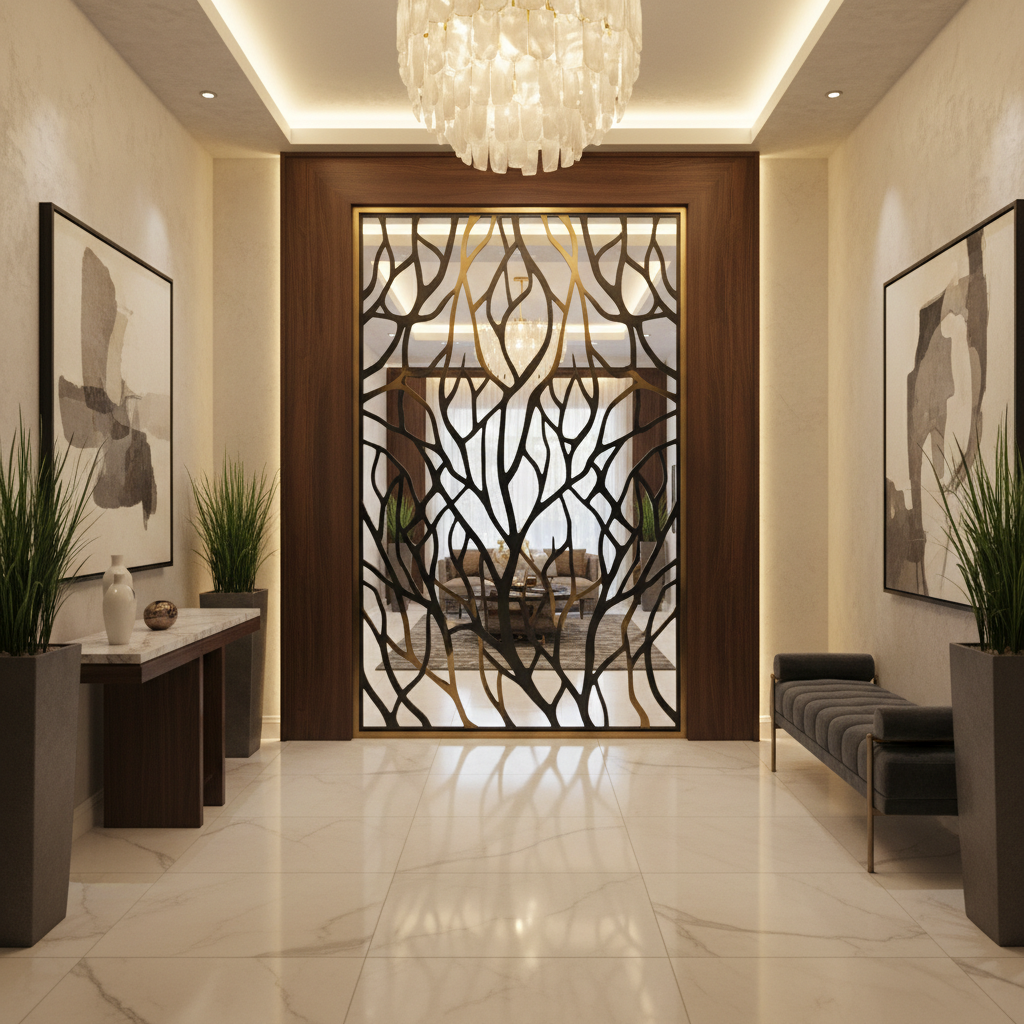
An entry screen does more than stop a sightline. In many oriental interiors, it shapes the threshold itself. It slows the reveal, protects privacy, and gives the arrival sequence a moment of dignity before the room opens fully. That is one reason entry screens still feel so relevant in contemporary homes, hotels, villas, and reception-led spaces.
When people search for an entry screen today, they often think in practical terms first: privacy behind the front door, better first impression, softer flow. Those are real reasons to buy one. But behind those practical reasons is a deeper logic. The threshold matters because the way a room is entered changes the way it is felt.
Why the threshold matters so much
A room that reveals everything at once can feel abrupt. An entry screen gives the room sequence instead of exposure. It allows the interior to unfold rather than announce itself immediately. That is why screens work so naturally in foyers, boutique reception spaces, larger city apartments, and villas where the arrival should feel deliberate.
If you are starting from category level, go first to Entryway Screens.
Privacy is part of the story, not the whole story
Many buyers begin with privacy, and that is understandable. No one wants the front door to open directly into the full living space. But the strongest entry screens do more than hide. They create a more composed first impression. That is why decorative or scenic screens often work better than plain partitions in foyers.
A piece such as the Framed Gold Bird Landscape Folding Screen works especially well because it combines privacy with ceremonial presence.
Entry screens are about pacing
The screen changes how the room is read over time. The first moment is partial, the second more open, the third fully legible. This pacing is one of the quiet strengths of oriental interiors. It is also one reason entry screens still make so much sense in modern homes where openness is valued but exposure can still feel too harsh.
How this connects to Japanese and Arabic spatial thinking
In Japanese-influenced interiors, the threshold often matters because light, interval, and softened reveal matter. You can see this more clearly in Japanese Aesthetics of Ma, Light, and the Folding Screen. In Arabic-speaking design contexts, privacy and ornament often coexist rather than compete, which is why entry screens can also resonate strongly there. For that angle, continue with Arabic Calligraphy, Privacy, and Ornament in Contemporary Interiors.
Contemporary foyers still need the same thing
Even in very modern interiors, people still want the entrance to feel more thoughtful. The need has not disappeared. It has only changed language. Today it might be called better flow, softened sightlines, or stronger first impression. But the room problem is often the same one older interiors solved through thresholds and screens.
For a product-facing next step, compare Luxury Apartment Foyer Screen Ideas, Villa Foyer Screen Ideas, and Penthouse Foyer Screen Ideas.
Conclusion
The meaning of an oriental entry screen is not only privacy. It is threshold, pacing, dignity, and first impression. That is why it remains such a powerful object in both traditional and contemporary interiors.
Recommended next steps: Browse Entryway Screens, compare the Framed Gold Bird Landscape Folding Screen, and visit International Project Support.
Continue Reading
For sizing and proportion at the threshold, continue with What Height Should a Room Divider Be?.
