

Living Room Folding Screens & Room Dividers
Living room folding screens help open-plan spaces feel more intentional without hard construction. Use them to soften direct sightlines, create a calmer backdrop behind seating, or zone a reading corner, lounge edge, or majlis-style hosting area while keeping the room visually connected.
Why use living room folding screens in open-plan spaces?
A living room often needs more visual structure than a fully open plan can provide. A folding screen gives you a way to shape the room without closing it off, especially when the sofa, entry sequence, dining edge, or lounge circulation all meet in one space.
In many homes, the problem is not wall-to-wall privacy. It is controlling what the eye sees first. A well-placed divider can stop the front door, corridor, or dining area from looking straight into the seating zone while still allowing light and movement to flow around it.
For decorative interiors, a scenic or material-led divider can also act as a backdrop. Instead of treating the screen like a temporary fix, you can use it as part of the living room composition together with rugs, lighting, and occasional tables.
How to choose the right screen
Panel count and room width
Three-panel and four-panel formats usually suit sofa corners, TV walls, and side zones. Five-panel or wider compositions work better when you need a longer backdrop or a softer boundary between the main lounge and another function.
Height, sightlines, and openness
Lower or visually breathable screens preserve openness, while taller panels create stronger privacy. If your goal is only to break a direct line of sight, you often do not need the tallest possible divider.
Material and transparency
Frosted or ribbed surfaces help when you want filtered privacy and light. Scenic lacquer, painted landscape, or solid framed screens feel more decorative and work best when the divider is meant to be seen as a focal layer.
Decorative style
Choose a calmer scenic screen for layered living rooms, a lighter architectural pattern for cleaner contemporary spaces, or a stronger oriental art panel when you want the divider to carry more of the room’s personality. You can also compare entryway folding screens if the same product needs to work near the foyer.
Recommended products
Start with the closest fit from the full shop, then compare panel count, finish direction, and decorative weight against your room.
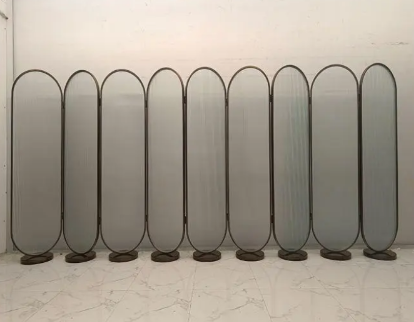
Arched Frosted Glass Room Divider | Eight-Panel Privacy Screen
$1990.00
Best for wide open-plan lounges that need a longer privacy edge without building a wall.

White Mountain Ink Wash Landscape Folding Screen | Five Panels
$1620.00
Best for scenic living rooms, majlis-inspired seating zones, and softer backdrop styling.

Asian Room Divider | Framed Gold Bird Landscape Screen
$1330.00
Best for decorative living rooms that want an oriental focal point near the sofa or entry side.
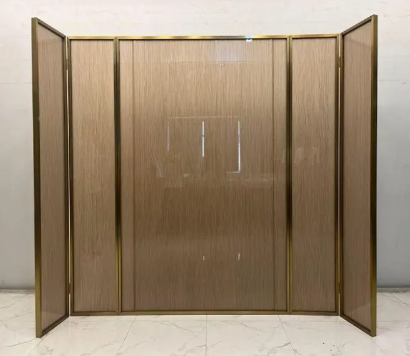
Bronze Textured Glass Privacy Screen Room Divider | Four Panels
$1470.00
Best for filtered privacy between seating areas, circulation, and light-filled corners.
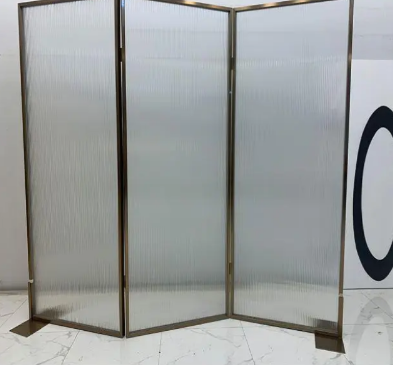
Frosted Ribbed Glass Privacy Screen | Three-Panel Folding Divider
$1270.00
Best for compact lounge corners where you want texture and privacy without visual heaviness.

White Gold City Pattern Screen | Modern Decorative Room Divider
$1180.00
Best for contemporary living rooms that need a decorative divider with a lighter graphic feel.
Custom sizing and project quote
If you are deciding between a screen for the living room, lounge edge, or adjacent entry zone, send us the room dimensions and a quick floor plan. We can help compare panel count, width coverage, finish direction, and which products from the Living Room Screens collection will feel proportional in the space.
- Room dimensions and approximate wall or opening width
- Preferred panel count and quantity
- Finish direction or style references
- Delivery destination
- Reference images, plans, or moodboards
FAQ
Do living room folding screens work in open-plan homes?
Yes. They are especially useful in open plans because they create visual zoning and privacy without making the space feel permanently divided.
How many panels are best for a living room screen?
Three or four panels suit smaller seating layouts, while five or more panels work better when the divider needs to span a wider lounge edge or backdrop wall.
Should a living room screen be fully opaque?
Not always. Many living rooms only need softened sightlines, so ribbed glass, frosted surfaces, or lighter framed panels can work better than a very dense divider.
Can I place a folding screen behind a sofa?
Yes. Behind-sofa placement is one of the strongest use cases when you want to add depth, privacy from an entry line, or a more finished visual backdrop.
What screen height usually looks right in a lounge?
That depends on ceiling height and what you are screening. In many living rooms, a divider that filters the seated eye line is enough, while double-height spaces may need taller panels.
Can living room screens be customized?
Yes. If you need a different panel count, overall width, or finish direction, use Request a Quote and share the room measurements.
Related scenario pages
If you are planning more than one room type, these related pages make comparison easier.