

Custom Folding Screens for Interior Designers
Custom folding screens for interior designers are useful when a project needs more than an off-the-shelf divider. Use them to coordinate panel count, dimensions, finish direction, and decorative language across villas, hospitality spaces, sales galleries, and residential interiors.
Why do interior designers specify custom folding screens?
Designers often need a screen to solve multiple problems at once: privacy, zoning, visual rhythm, and a decorative focal point. Ready-made dimensions are a useful starting point, but many projects need better proportional control.
Custom screens are especially valuable when the divider must fit a precise plan, align with millwork or furniture, or repeat across several rooms with consistency. That is why project-led specification usually starts with room dimensions, panel count, finish direction, and reference imagery.
GreenArtis supports designer-led inquiries for homes, villas, hotel suites, boutiques, and show units. If the project is cross-border or GCC-based, include delivery context through International Project Support as part of the quote brief.
How to choose the right screen
Start with function and sightlines
Define whether the divider is for privacy, layering, circulation control, or decorative emphasis. That will shape panel count, opacity, and whether the screen needs to read more like architecture or more like art.
Check proportion against the room
The right custom screen should feel scaled to the room width and furniture composition. This matters as much in villa foyers and suites as it does in compact luxury apartments.
Coordinate material and finish direction
Material selection affects both privacy and how the divider belongs to the project palette. Finish direction, scenic flow, and framing detail become especially important when the screen is a focal layer.
Use ready designs as a specification base
Many designer projects begin with an existing product from Custom Screens, Landscape Screens, or Entryway Screens and then adapt the format for the room.
Recommended products
Start with the closest fit from the full shop, then compare panel count, finish direction, and decorative weight against your room.
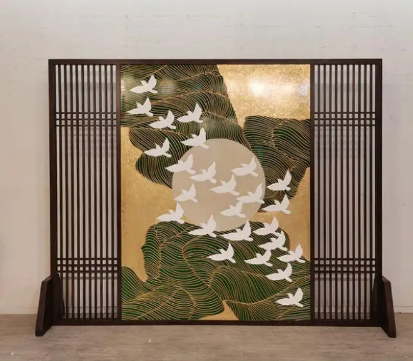
Asian Room Divider | Framed Gold Bird Landscape Screen
$1330.00
Best for designer-led foyers and lounges that want a scenic divider with architectural presence.
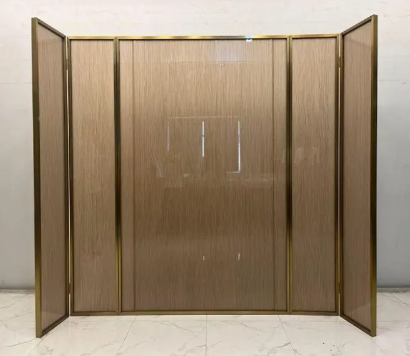
Bronze Textured Glass Privacy Screen Room Divider | Four Panels
$1470.00
Best for projects that need a more contemporary material expression and filtered privacy.
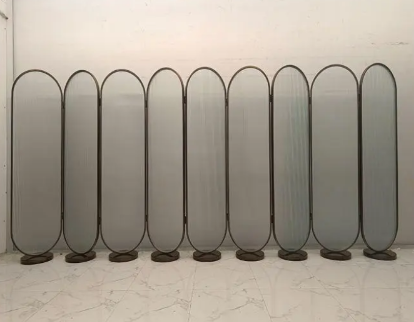
Arched Frosted Glass Room Divider | Eight-Panel Privacy Screen
$1990.00
Best for wide hospitality or residential spaces that need a longer customable run of panels.
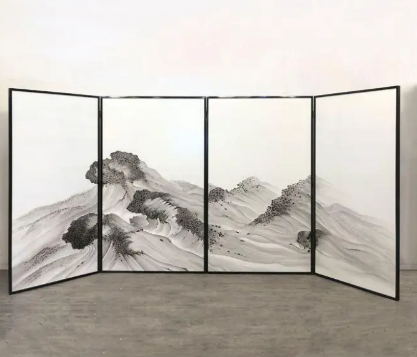
White Mountain Ink Wash Landscape Folding Screen | Five Panels
$1620.00
Best for interiors that want a calm scenic language and a softer layered backdrop.
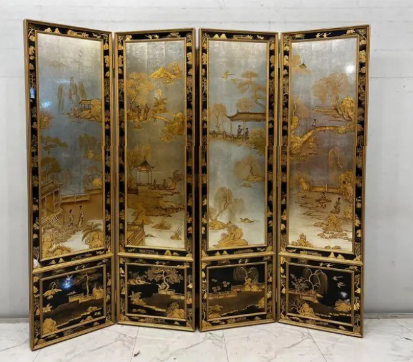
Black Gold Landscape Folding Screen | Scenic Lacquer Divider
$1700.00
Best for high-impact decorative statements in villas, show units, and luxury lounges.
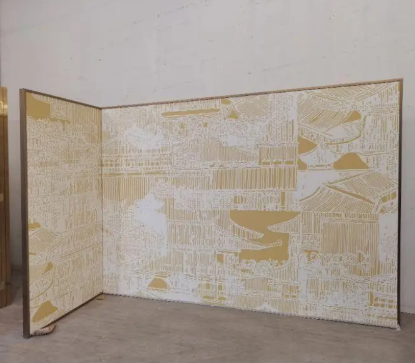
White Gold City Pattern Screen | Modern Decorative Room Divider
$1180.00
Best for contemporary design schemes that need a cleaner graphic divider direction.
Custom sizing and project quote
Please include room dimensions, target panel count, quantity, finish direction, delivery destination, reference images, and any moodboard or material notes. This is the fastest way to move from inspiration to a usable quote. Start with Request a Quote and add any international delivery notes through International Project Support when relevant.
- Room dimensions and approximate wall or opening width
- Preferred panel count and quantity
- Finish direction or style references
- Delivery destination
- Reference images, plans, or moodboards
FAQ
Can interior designers request custom panel counts and widths?
Yes. That is one of the most common reasons designers inquire, especially when a standard format is close but not proportional to the room.
Do I need to choose a product first before requesting a custom quote?
No. You can start with a room problem, a moodboard, or a reference image. We can then suggest the most relevant designs to adapt.
What project details are most useful in a quote request?
Room dimensions, desired panel count, quantity, finish direction, delivery destination, and reference images are the most helpful starting points.
Can a designer adapt an existing GreenArtis screen rather than starting from zero?
Yes. Many custom projects begin with an existing design and then adjust width, panel rhythm, or proportions to suit the space.
Do you support villas, show units, and hotel projects?
Yes. Designer-led inquiries across residential, hospitality, and sales-gallery projects are all within scope.
Can you support international designer projects?
Yes. Add delivery destination and project timing, and review International Project Support if the order is cross-border.
Related scenario pages
If you are planning more than one room type, these related pages make comparison easier.