

Blog
Bamboo Motifs in Oriental Screens: Resilience, Rhythm, and Quiet Luxury

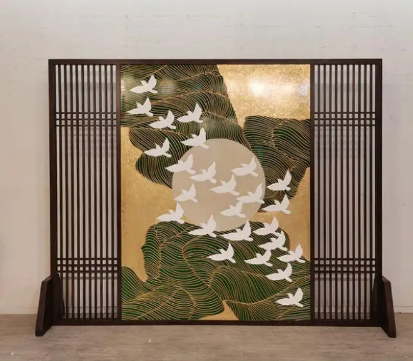
Bamboo appears again and again in oriental art because it carries more than surface beauty. It suggests resilience, uprightness, movement, and calm. When that motif is brought onto a folding screen, it does not simply decorate the divider. It changes the character of the room. The screen begins to feel more rhythmic, more poised, and often more quietly luxurious than a plain partition ever could.
This is one reason bamboo-led screens continue to work so well in contemporary interiors. They give the room a story without making it noisy. They create cultural texture while remaining elegant enough for modern homes, boutique hospitality spaces, tea rooms, and project-led interiors that need refinement rather than clutter.
Why bamboo symbolism still feels relevant
Bamboo is often associated with flexibility and resilience because it bends without breaking. In interiors, that symbolic association matters because people do not choose screens only for utility. They choose them because the object has presence. A bamboo motif can make that presence feel more composed and more grounded. It introduces a visual rhythm that works especially well in foyers, living rooms, lounges, and rooms that need a decorative anchor.
If you are starting from collections, compare New Chinese Style Screens with Solid Wood Screens.
Rhythm is part of the appeal
Bamboo works beautifully on screens because its linear quality already suggests panel rhythm. The verticality of stems, the spacing between leaves, and the sense of upward growth all sit naturally on a folding format. That makes the screen feel integrated rather than decorated for decoration’s sake. It is also why bamboo motifs can work in quieter modern interiors that want oriental character without excessive ornament.
Bamboo feels luxurious in a quieter way
Luxury is not always about shine or heaviness. Some of the most refined interiors feel expensive because they are controlled. Bamboo supports that kind of quiet luxury. It brings movement and cultural depth, but it does so with restraint. That is especially useful in living rooms, villa foyers, hospitality lounges, and residential projects where the divider should read as collected rather than flashy.
A good example is the Gold Bamboo Wall Art Screen, which works as both art object and divider.
Where bamboo screens work best
Bamboo-led screens usually work well where the room needs a stronger decorative focal point but should still feel calm. Entry sequences, living room corners, behind-sofa placements, boutique hotel lounges, tea rooms, and hospitality waiting areas can all benefit. They are also useful when the architecture is fairly simple and needs one statement element that still feels culturally grounded.
For more room-specific ideas, continue with Oriental Room Divider Ideas for Living Rooms and Villa Foyer Screen Ideas.
How bamboo connects to living heritage rather than nostalgia
The strongest oriental interiors do not treat traditional motifs as frozen history. They treat them as living design language. That is why bamboo continues to matter. It can move from paper traditions and painting references into contemporary hospitality, residential, and project contexts without losing meaning. For a broader cultural reading, see Living Heritage Behind Oriental Screens.
What to consider before specifying a bamboo-led screen
- Does the room need calm elegance or a bolder ceremonial focal point?
- Will the screen be seen mainly from a distance or up close?
- Should the motif feel more decorative, more painterly, or more architectural?
- Does the project need one signature piece or repeated units?
If the screen is part of a broader hospitality or international sourcing project, use International Project Support or Request a Quote.
Conclusion
Bamboo motifs work because they bring both symbolism and spatial rhythm. They can make a divider feel resilient, composed, and luxurious without turning it into visual noise. That balance is exactly why bamboo remains such a strong oriental design language today.
Recommended next steps: Compare Gold Bamboo Wall Art Screen, New Chinese Style Screens, and Living Heritage Behind Oriental Screens.
Frequently Asked Questions
What does bamboo symbolize on an oriental screen?
Bamboo is often associated with resilience, integrity, and graceful movement, which is why it feels both meaningful and visually elegant on screens.
Do bamboo motifs only suit traditional rooms?
No. Bamboo can work very well in modern interiors because its linear rhythm and calmer symbolism fit cleaner spaces beautifully.
Where should a bamboo screen be placed?
They work especially well in foyers, living rooms, tea spaces, and hospitality lounges that need a decorative but controlled focal point.
