

Blog
Oriental Screen Ideas for Multi-Generational Homes That Need Privacy and Flow

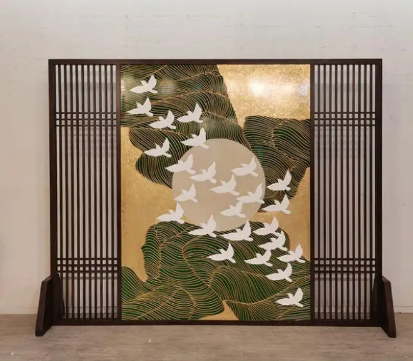
Multi-generational homes often need more privacy than open-plan layouts naturally provide, but they also need flexibility. A folding screen can help because it creates softer boundaries without turning the house into a maze of permanent partitions. That makes it especially useful in homes where grandparents, parents, children, and guests all share space differently through the day.
The best oriental screen ideas for multi-generational homes are the ones that preserve dignity and flow at the same time. The divider should help the room feel more respectful, not more cramped.
Use screens where privacy changes by time of day
One of the strengths of a folding screen is that it can respond to changing household needs. A lounge may need more separation in the evening, a reading corner may need quiet during the day, and an entry-adjacent zone may need more privacy when guests arrive. That is why screens often outperform fixed partitions in multi-generational homes.
For renter and flexible-layout logic, continue with Can a Folding Screen Replace a Wall in a Rental Apartment?.
Shared homes benefit from gentle thresholds
In multi-generational layouts, the goal is rarely complete isolation. More often, the home simply needs softer transitions between shared and personal zones. That is where scenic, lattice, and calmer solid wood screens can be especially effective. They make the house feel more layered without losing connection.
Conclusion
Oriental screens work well in multi-generational homes because they help create privacy with more grace and flexibility than fixed partitions. They support family living without making the home feel fragmented.
Recommended next steps: Compare Folding Screens, Living Room Screens, and 7 Screen Placement Mistakes to Avoid in Open-Plan Living Rooms.
