

Blog
The Art of Zoning: How Folding Screens Transform Open-Plan Living Rooms

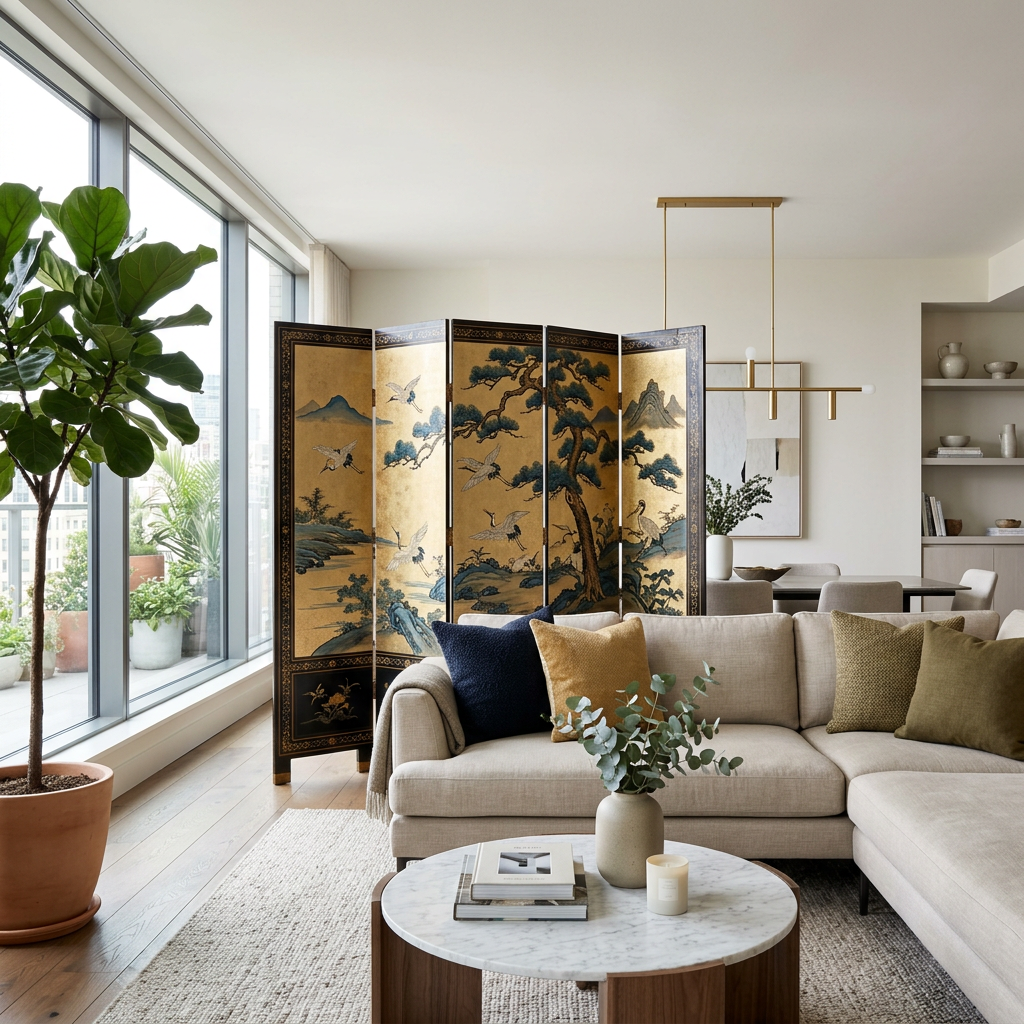
Open-plan living has become the hallmark of modern architecture. The seamless flow from the kitchen to the lounge creates a sense of space and light that traditional segmented homes often lack. However, for homeowners, interior designers, and boutique hospitality buyers, the beauty of an open-plan layout comes with a significant challenge: how do you define functional zones without sacrificing that prized sense of airiness? The answer lies in a centuries-old design element that is making a powerful comeback: folding screens.
In this guide, we will explore why folding screens are the ultimate solution for large, multi-functional spaces, providing practical styling tips for different environments, from private residences to high-end boutique hotels. We will also look at how pieces from Oriental Screens can serve as both functional dividers and stunning focal points in any interior scheme.
The Challenge of Modern Open-Plan Living
While expansive living areas are visually impressive, they can often feel cold, cavernous, or disorganized. Without walls to guide the eye, the purpose of each area—be it a cozy reading nook, a formal dining space, or a focused home office—can become blurred. Additionally, the lack of physical barriers often leads to issues with acoustics and a total absence of privacy.
The core of the problem is that humans naturally seek defined boundaries for different activities. When we eat, we want a sense of containment; when we work, we need a lack of visual distraction. An undivided space, while beautiful, doesn’t always support these psychological needs. This is where the folding screen bridges the gap between the open-plan dream and the practical reality of daily life.
Defining Purpose Without Permanent Walls
The traditional solution of building walls or installing heavy sliding doors is often expensive, permanent, and detrimental to the natural light flow. This is where folding screens excel. They provide a structural suggestion of a room division without the commitment of masonry. For a boutique hotel, a screen can instantly create a private dressing area within a suite; for a homeowner, it can hide a cluttered workspace at the end of the day, allowing the room to transition back into a place of relaxation.
Benefits of Folding Screens in Interior Design
The primary benefit of a folding screen is its versatility. Unlike a sofa or a bookshelf used as a divider, a screen is lightweight and portable. It can be expanded to its full width to block a view or folded down to a single panel to act as a decorative accent.
Enhancing Privacy and Acoustic Comfort
Privacy is often the first thing lost in an open-plan design. Folding screens offer an immediate remedy. By strategically placing a high-quality divider, you can shield a seating area from the front door or create a quiet corner for conversation in a busy lobby. Furthermore, screens made from wood or fabric help to dampen sound, reducing the echo that often plagues large, open spaces with hard flooring. This makes them ideal for boutique hospitality buyers who need to manage sound levels in guest-facing areas.
Creating Visual Interest and Focal Points
Beyond their functional use, folding screens are exceptional tools for adding texture and color. A hand-painted screen acts as a piece of movable art. In a neutral-toned living room, a screen with a bold design provides a necessary focal point that ties the rest of the decor together. This is particularly valuable for interior designers looking to add a layer of sophistication to a project without over-cluttering the floor space. The depth created by the screen’s multiple panels adds a three-dimensional quality that flat wall art simply cannot replicate.
Practical Styling Tips for Modern Interiors
To make the most of a folding screen in an open-plan setting, consider the following styling strategies:
- Material and Texture Selection: Choose materials that complement your existing furniture. In a modern industrial space, a dark wood or metal-framed screen works beautifully. For a boutique hospitality setting, silk-lined or lacquered finishes add a touch of luxury and prestige.
- Strategic Placement for Flow: Never block the primary path of movement. Instead, use the screen to create “corridors” or to tuck away utility areas like a bar cart or a media unit. This ensures the space remains navigable while still feeling structured.
- Lighting Interaction: Place a lamp behind a screen with open latticework or translucent panels to create a soft, diffused glow in the evening. This adds depth and mood to the entire living room, making it feel more intimate as the sun goes down.
- Layering with Plants: Position a large indoor plant next to your screen. The organic shapes of the leaves against the structured panels of the screen create a layered, professionally designed look that is popular in contemporary interior design.
Oriental Screens: Where Tradition Meets Modern Versatility
For those seeking high-end craftsmanship and timeless design, the collections from Oriental Screens are an unparalleled choice. Whether you are a homeowner looking for a unique statement piece or a boutique hospitality buyer requiring durable yet elegant partitions, Oriental Screens offers a range of designs that blend traditional artistry with contemporary living needs. Their hand-crafted screens are more than just dividers; they are heritage pieces that bring history and character into the modern home.
One of the most appealing aspects of Oriental Screens is their focus on quality materials and hand-painted details. In a world of mass-produced furniture, these pieces offer a sense of individuality and soul that designers and luxury buyers crave. They fit seamlessly into minimalist modern settings as well as more traditional decors, proving that good design truly is timeless.
Further reading: If you want the wider design logic behind this spatial approach, see Oriental Aesthetics in Modern Interiors and Why Folding Screens Matter in Oriental Interior Design.
Conclusion
The folding screen is the ultimate tool for the modern open-plan living room. It offers the flexibility to change your space as your needs evolve, providing privacy, beauty, and organization in one elegant package. By selecting a piece that reflects your personal style—such as the exquisite offerings from Oriental Screens—you can ensure that your open-plan home remains both spacious and perfectly defined. For interior designers and hospitality buyers, it is the secret weapon that combines aesthetic impact with practical utility.
Recommended collections: Explore Folding Screens, Living Room Screens, and our full shop for zoning-friendly designs.
Frequently Asked Questions
Are folding screens good for open-plan homes?
Yes. They help define living, dining, and work zones without blocking natural light or forcing permanent construction.
Which type of screen works best behind a sofa?
Scenic and multi-panel dividers usually work best because they add depth from a distance and give the seating area a more finished backdrop.
Where should I start if I need both privacy and style?
Start with our Folding Screens and Living Room Screens collections, then narrow by panel count, finish, and visual mood.
Further Reading
If you are still comparing layouts and divider types, continue with What Is a Folding Screen Room Divider? and Are Folding Screens Good for Privacy?.
More Practical Guides
If you are planning for a compact layout, continue with Best Room Divider Ideas for Small Apartments Without Building Walls. If privacy and light matter most, read Modern Privacy Screen Room Divider Ideas That Still Let Light Through.
