

Blog
How to Use an Entryway Screen Behind the Front Door

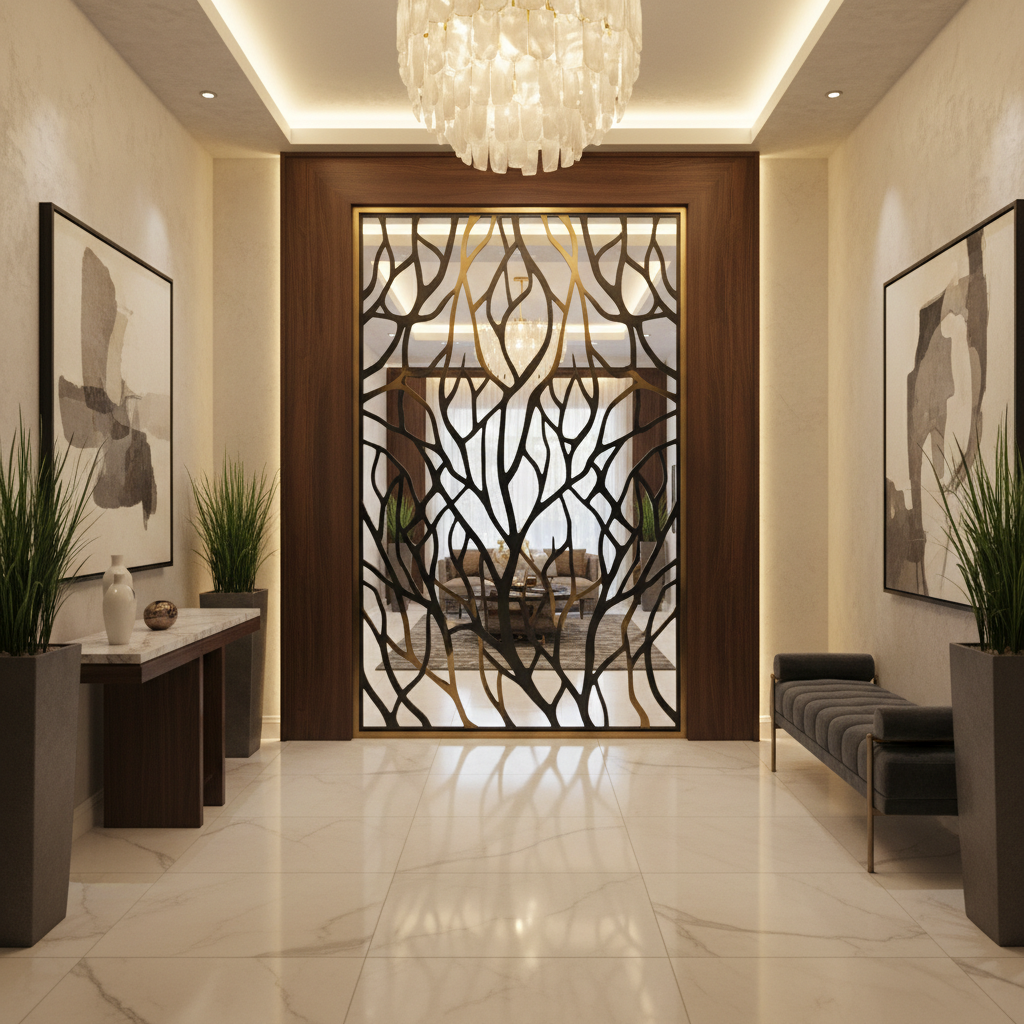
An entryway screen behind the front door solves one of the most common layout problems in residential and hospitality interiors: the room is visible too quickly. When someone opens the door and immediately sees the whole space, the entrance can feel exposed, unfinished, or too direct. A screen changes that without blocking the room completely.
The goal is not to build a wall. The goal is to slow the reveal, improve privacy, and create a more intentional first impression. That is why entryway screens are often more about composition than simple separation.
Why place a screen behind the front door?
A screen creates a moment of transition. Instead of letting the eye run straight through the house or suite, it introduces a pause. In design terms, that makes the entrance feel more composed. In practical terms, it helps with privacy, especially in layouts where the main lounge or dining area sits directly opposite the door.
If this is your main room problem, the best place to start is Entryway Screens.
Choose a screen that can handle first impressions
The foyer is one of the few parts of a home that people read in seconds. A screen in that position needs enough presence to justify being noticed immediately. Scenic or framed options often work well here because they behave like both divider and focal point. The Framed Gold Bird Landscape Folding Screen, for example, is especially suited to foyers and reception-led interiors where the entrance should feel decorative as well as private.
Do not place the screen too close to the door
A common mistake is putting the screen directly against the entrance path. The better result usually comes from giving it some breathing room so the divider feels intentional rather than obstructive. Even a modest offset can improve how the space flows. The point is to redirect the sightline, not create a bottleneck.
Match the style to the rest of the interior
If the foyer is part of a modern, cleaner room, compare classic scenic options with New Chinese Style Screens. They tend to fit more naturally into contemporary interiors while still carrying oriental character. If you want a broader design framework, our guide on bringing oriental aesthetics into entryways and living rooms is a useful next step.
Entryway screens also work in reception spaces
This is not only a residential idea. Boutiques, reception desks, restaurants, and hotel entries often benefit from exactly the same layout move. A screen behind the front door or near the entry point helps the space feel calmer, more directed, and more memorable. That is why many of the same ideas from entryway screen planning transfer well into hospitality projects.
What to check before choosing
- How wide is the visible area from the front door?
- Does the screen need to stop a direct sightline or mostly soften it?
- Should it feel calm and scenic, or stronger and more decorative?
- Will it be seen mainly from the door, from the main room, or from both sides?
If you are still choosing between decorative and more practical directions, the room-by-room article on how to choose the right screen for an entryway or living room will help narrow it down.
Conclusion
An entryway screen behind the front door works because it changes the arrival sequence. It gives privacy, improves composition, and helps the entrance feel deliberate instead of exposed. In many homes, that single change makes the whole layout feel more resolved.
Recommended next steps: Browse Entryway Screens, compare New Chinese Style Screens, or send room photos through Contact Us.
Frequently Asked Questions
Does the screen have to block the door completely?
No. It only needs to interrupt the direct line of sight enough to improve privacy and first impressions.
What style works best in a modern foyer?
Framed scenic screens or cleaner New Chinese Style screens usually fit best when the foyer is modern but still wants oriental character.
Can this work in a restaurant or reception area?
Yes. Many reception spaces benefit from the same controlled reveal that works so well in residential entryways.
Continue Reading
For a more privacy-focused entryway guide, continue with Best Screen for Foyer Privacy Without Making the Entry Feel Heavy.
