

Blog
What Height Should a Room Divider Be? A Practical Guide for Homes and Hospitality

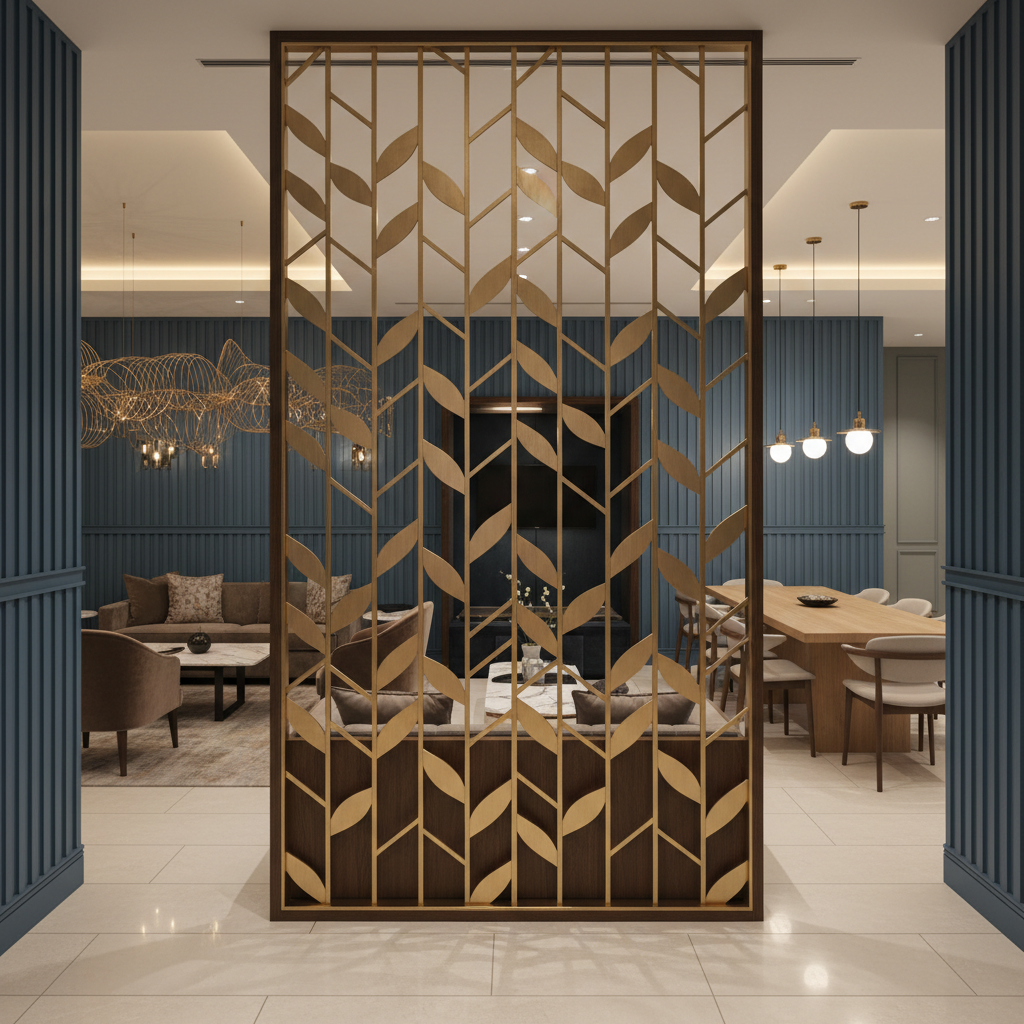
Room divider height is one of those decisions that seems simple until the piece is actually in the room. Too low, and the divider does not solve the sightline problem. Too tall, and it can feel heavy or disproportionate. The right height depends on what the screen is trying to do: soften a view, create privacy, frame an arrival, or act like a decorative backdrop.
That means there is no single perfect height for every screen. The better question is what the room needs the divider to accomplish and how visible the screen will be from the main approach angles.
Start with the sightline problem
If the room divider is near a front door, behind a sofa, or at the edge of a lounge, ask what view needs to be interrupted. A divider does not always need to hide a full standing figure. Sometimes it only needs to break the direct line of sight enough to make the room feel more composed. In those cases, a lighter proportional decision often works better than the tallest possible screen.
For entrance-specific thinking, see How to Use an Entryway Screen Behind the Front Door.
Low is calmer, tall is more architectural
A lower divider tends to feel more decorative and integrated. A taller divider feels more assertive and architectural. Neither is automatically better. In a living room, a screen that feels too tall can dominate the space unnecessarily. In a hotel lounge or reception sequence, a taller piece may actually help because the room needs more presence and zoning.
Room scale matters more than rules
A modest screen can feel perfect in an apartment and undersized in a villa foyer. Likewise, a tall scenic screen can feel grand in a hospitality lounge and too heavy in a tight studio. This is why screen height should always be judged in relation to ceiling height, room width, furniture massing, and approach distance rather than by a fixed formula alone.
If your project is larger-scale or hospitality-led, compare Custom Room Dividers for High-End Homes and Hospitality Projects with Custom Screens.
Use height differently by room type
- Entryways and foyers: enough height to break the first sightline and create arrival sequence
- Living rooms: enough height to frame seating or soften openness without feeling bulky
- Suites and studios: enough height for privacy but not so much that the room feels cut in half
- Hotel lounges and reception spaces: enough height for stronger presence and spatial definition
Decorative purpose changes the answer
If the screen is mainly decorative, proportion may matter more than concealment. Scenic panels, crane motifs, bamboo screens, and landscape-led dividers often want enough height to let the imagery breathe. If the screen is mainly solving privacy, then line-of-sight control matters first. Many projects are somewhere in between, which is why good screen selection blends function and composition together.
When not to go too tall
Do not default to the tallest screen if the room is already tight, dark, or visually crowded. In those cases, a slightly lower screen with better placement often works better than a very tall piece. For light-preserving separation, it may even be better to use a modern filtered option such as the Bronze Textured Glass Privacy Screen.
Conclusion
The right room divider height depends on privacy, scale, and how the room should feel. A screen should interrupt the view enough to solve the problem, but not so aggressively that it overwhelms the space. In most projects, proportion and placement matter as much as height itself.
Recommended next steps: Compare Entryway Screens, Living Room Screens, and Request a Quote if you have dimensions ready.
Frequently Asked Questions
Should a room divider be taller than the sofa?
Usually yes, if it sits behind the sofa and needs to register clearly, but it should still feel proportional to the room.
Do hotel dividers need to be taller than residential ones?
Often yes, because hospitality spaces are larger and the divider usually needs more visual presence.
What is the main mistake with screen height?
The main mistake is choosing height without first defining the sightline problem the divider is supposed to solve.
