

Blog
Gallery and Showroom Screen Ideas for Art-Led Interiors

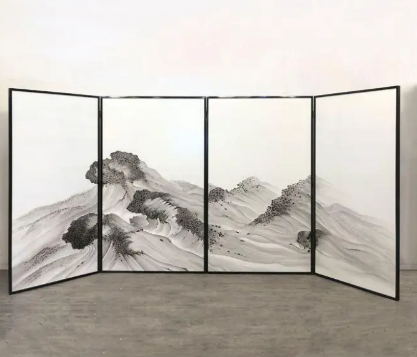
In a gallery or showroom, the divider is never just a divider. It affects how objects are approached, how sightlines unfold, and how the room is read as a whole. That is why screens can be so useful in art-led interiors. They create sequence without the heaviness of built walls, and they can add atmosphere while still preserving flexibility.
This is especially important in spaces that need to rotate displays, support launches, or create pockets of focus inside a broader open plan.
Use screens to control visual pace
One of the biggest challenges in a showroom is that everything can become visible at once. When that happens, the room loses tension and focus. A screen helps because it creates partial reveal. It gives the visitor a clearer path of attention and makes the room feel more curated.
Screens can frame objects, not compete with them
The right screen should support the displayed object rather than fight it. Scenic or decorative screens are not always wrong in these spaces, but they need to be chosen carefully. If the displayed objects are visually strong, a calmer divider often works best. If the room itself needs more identity, a more art-led scenic screen can add value.
For elegant but more atmospheric options, compare Landscape Screens with New Chinese Style Screens.
Flexibility is one of the biggest advantages
Unlike built partitions, screens can move with exhibitions, product launches, and changing retail layouts. That makes them especially useful in boutiques, showrooms, galleries, and hospitality spaces that host different events over time. If the room must evolve, movable dividers often outperform fixed architecture.
Where screens work best in display-led interiors
- At the entrance to slow and frame the first impression
- Between display families that need distinct mood zones
- Behind a hero object that needs stronger backdrop and depth
- Near consultation or hospitality corners that need softer privacy
When custom becomes important
Art-led interiors often depend heavily on scale and alignment. That is why Custom Screens are often the better route for showrooms and display spaces. The divider may need a specific width, repeated units, or coordination with a launch concept. If that is the case, use Request a Quote.
Conclusion
Gallery and showroom screens work because they add sequence, focus, and atmosphere without taking flexibility away. They help an art-led interior feel more curated and more spatially intelligent, which is often far more useful than building permanent partitions too early.
Recommended next steps: Compare Custom Screens, Landscape Screens, and Jewelry Boutique Room Divider Ideas.
Frequently Asked Questions
Why use screens in a showroom instead of walls?
Screens preserve flexibility, create sequence, and can be repositioned as products or displays change.
Do decorative screens work in galleries?
They can, but only when they support the displayed work rather than distracting from it.
When is custom worth it?
Custom is worth it when alignment, repeated units, or a specific display concept matter to the project.
Continue Reading
For collector-style residential atmosphere, continue with Piano Room Screen Ideas and How to Pair Oriental Screens With Marble, Bronze, and Quiet Texture.
