

Blog
Lattice Screen Ideas for Filtered Privacy and Patterned Light

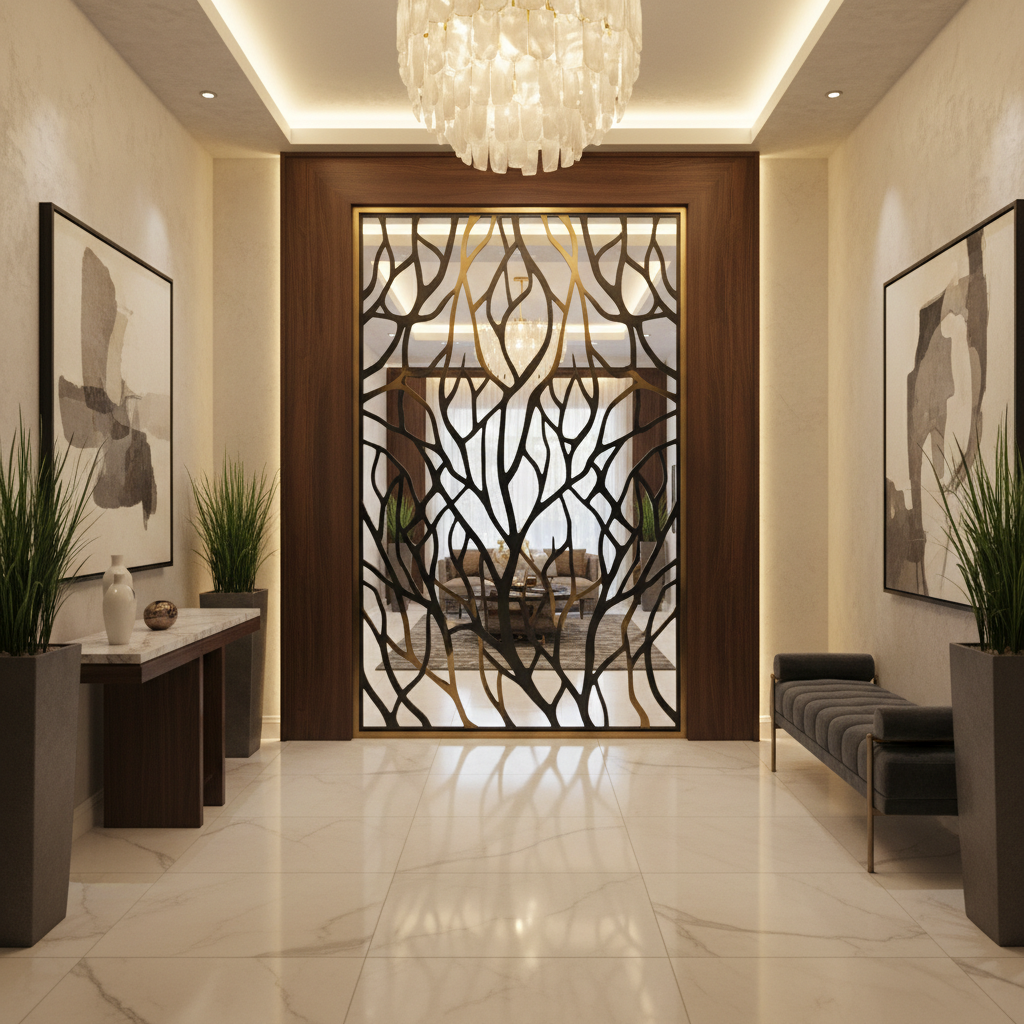
A lattice screen solves a very specific interior problem. The room needs privacy, but not heaviness. It needs separation, but not a dead wall. That is where lattice works so well. The structure lets light move, gives the eye rhythm, and creates a softer edge between zones. The result is often more elegant than either full concealment or no divider at all.
This is one reason lattice screens remain so useful in foyers, living rooms, lounges, boutique hospitality interiors, and rooms where filtered privacy feels more appropriate than complete blockage.
Why lattice feels lighter than a solid divider
A solid screen stops the eye more abruptly. A lattice screen slows the eye instead. That difference matters. It makes the divider feel more breathable and more architectural at the same time. Light passes through, shadows and pattern animate the room, and the divider becomes part of the atmosphere rather than only a barrier.
For category-level comparison, start with Folding Screens and Entryway Screens.
Filtered privacy is often better than total concealment
Many rooms do not actually need a fully opaque divider. They only need the direct view softened. That is why lattice works especially well behind a front door, at the edge of a living zone, or near lounge seating in hospitality spaces. It gives the room more dignity without turning it dark or closed.
Patterned light adds another layer of beauty
One of the most overlooked strengths of lattice screens is the way they interact with light. Depending on placement, they can cast shadow, create a repeating visual rhythm, and make a plain room feel more intentional. This is especially useful in interiors that already value texture and atmospheric lighting. For broader light-related thinking, continue with How to Layer Oriental Screens With Lighting, Stone, and Wood.
Where lattice screens work best
- Entryways that need privacy without feeling blocked
- Living rooms that need decorative but breathable separation
- Tea and hospitality lounges that benefit from filtered calm
- Retail and reception areas that need a lighter spatial edge
The Framed Gold Bird Landscape Folding Screen is a strong example of how lattice can carry both filtered privacy and richer decorative presence.
Conclusion
Lattice screens work because they create privacy through rhythm rather than heaviness. They allow light, pattern, and atmosphere to stay alive in the room while still improving separation. That balance is exactly why they remain such a strong choice for refined interiors.
Recommended next steps: Compare Framed Gold Bird Landscape Folding Screen, Entryway Screens, and How to Use an Entryway Screen Behind the Front Door.
Frequently Asked Questions
Do lattice screens create enough privacy?
Yes, when the goal is filtered privacy rather than complete concealment. They are excellent for softening direct sightlines.
Where do lattice screens work best?
They work especially well in entryways, lounges, living rooms, and hospitality settings that need lightness as well as separation.
Why are lattice screens more decorative?
The open pattern creates rhythm, shadow, and visual texture, so the divider contributes to atmosphere instead of only dividing space.
